
What you can do with this tool
- Guess your bill before it arrives: enter your units and see roughly what you'll owe.
- Stay under the 200-unit line: check how close you are to the cheaper protected rate.
- See where the money goes: break the bill into units, fixed charges and taxes.
- Spot a jump in usage: compare months and find what pushed your bill up.
It takes seconds — and the rest of this guide shows you how your electricity bill is built up.
Use the free Bijli Bill Calculator: enter your units to estimate your bill before it arrives — open the calculator →
📌 Key takeaways
- One unit is one kWh: running a 1,000-watt appliance for one hour uses one unit.
- The 200-unit line matters most: stay at or under 200 units for six months and you keep protected lower rates; cross it and the higher rate applies to the whole bill.
- A bill is a stack: units, a fixed monthly charge, then GST, fuel price adjustment, TV fee and surcharges on top.
- Paying late adds a surcharge, usually 10% — paying on time is the easiest saving of all.
💡 Bijli Bill — at a glance
The key numbers from this guide, in one place.
1What is a bijli bill?
A bijli bill is the monthly electricity bill from your distribution company — LESCO in Lahore, IESCO in Islamabad, K-Electric in Karachi, and others across Pakistan. It charges you for the electricity your home used in the billing month, measured in units, where one unit is one kilowatt-hour (kWh): running a 1,000-watt appliance for one hour uses one unit.
The bill is not a single charge. It is a stack: the cost of the units you used, a fixed monthly charge, and then a set of taxes and surcharges added on top. That stack is why a bill can feel much bigger than the units alone suggest — and why two homes using the same units can pay different amounts.
Your meter reader records the reading each month, and the difference from last month's reading is your usage. If the meter cannot be read, the company may send an estimated bill based on past usage, which is later adjusted — one of the most common reasons for a surprise bill.
2The formula — units, then rupees, with a worked example
A bijli bill starts with units, and one unit is simply one kilowatt-hour: a 1,000-watt appliance running for one hour.
Work out the units first, then multiply by your slab rate. Fixed charges, taxes and surcharges sit on top of that energy charge, so the per-unit rate alone is never the whole bill.
Common mistake: forgetting the 200-unit line. Stay at or under 200 units for six months and you keep the lower protected rates; cross it and the higher rate applies to the whole bill, not just the extra units.
3How to use the bijli bill calculator
Our calculator estimates your bill before it arrives, so there are no surprises:
- Enter your units used — from your meter, or from last month's bill if you are estimating.
- Pick your consumer type — residential is the usual choice for homes; commercial rates are different.
- See the breakdown — energy charges by slab, fixed charges, and the taxes that get added, so you can see where the money actually goes.
- Try a lower unit number to see what saving 50 units would do to the total. Slab pricing means the savings are often bigger than people expect.
The calculator uses the current tariff structure. Rates are revised by the regulator from time to time, so treat the result as a close estimate and check the printed bill for the final figure.
4A short history of electricity bills in Pakistan
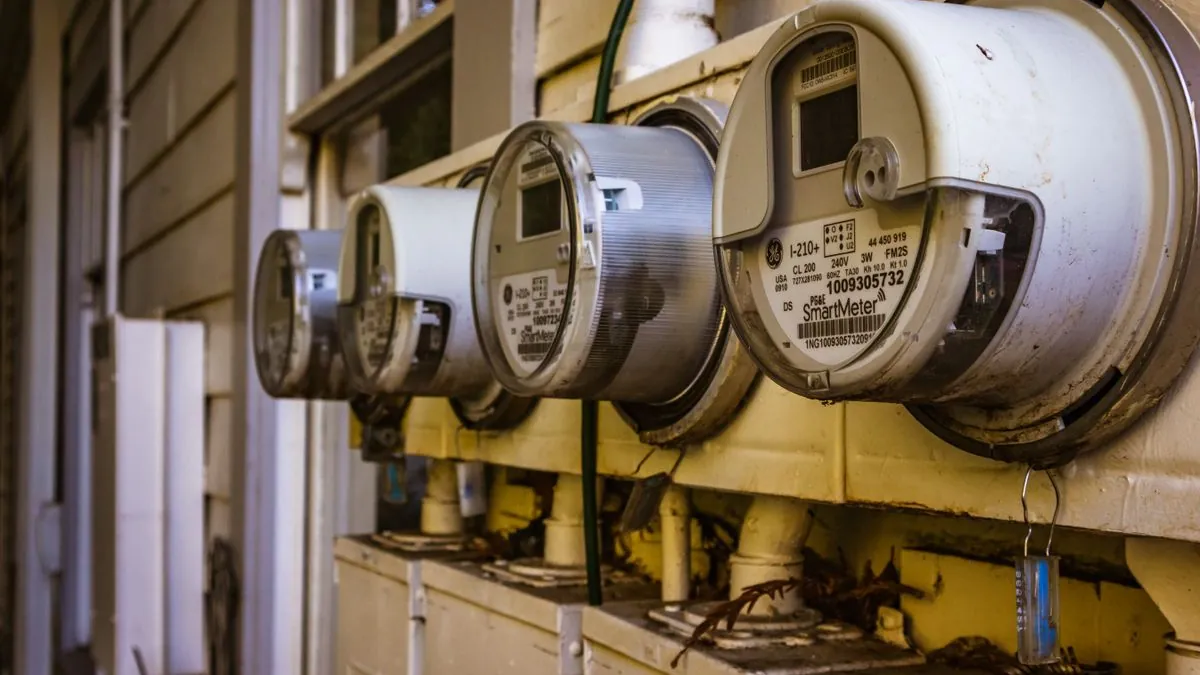
Electricity came to this part of the world in the early 1900s. Karachi got its first electric supply company in 1913, when the Karachi Electric Supply Company was set up, and Lahore and other big cities followed in the decades after. Back then only a few streets and businesses had power, and billing was a simple matter of counting units on a dial meter.
After independence, the Water and Power Development Authority (WAPDA) was created in 1958 to build dams and extend the grid across the country. As the network grew, so did the billing system: slab rates that charge more per unit as you use more, plus fixed charges, fuel price adjustments and taxes layered on top.
Today the distribution companies — LESCO, K-Electric, IESCO and the rest — still bill on the same basic idea: units used times the slab rate, with the extras stacked above. The rates and slabs change with government policy, but the maths underneath has not changed in a century.
5How slab rates work
Pakistan's residential tariff is a slab system: the more units you use, the higher the per-unit price. The first units are the cheapest, and each higher slab costs more per unit. That is why a home using 350 units does not just pay a little more than a home using 300 — it pays a higher rate on the extra units too.
There is also a split between protected and non-protected consumers. Households using up to 200 units a month for six months in a row are protected and pay lower rates; once you cross 200 units, you lose protected status and move to the higher non-protected rates. That single crossing is the reason many bills suddenly jump — the higher rate applies to the whole bill, not just the units above 200.
Because rates change with government and regulator decisions, this guide does not print fixed per-unit prices. The calculator on this site uses the current structure — use it for the number, and use this guide to understand the logic.
6The taxes and charges on top
Even if you understand the slabs, the bottom of the bill can still surprise you. These lines appear on most residential bills:
- General Sales Tax (GST) — charged as a percentage of the energy cost, and usually the biggest tax line on the bill.
- Fuel Price Adjustment (FPA) — an adjustment for changes in fuel costs at power plants, which can be positive or negative and varies month to month.
- TV licence fee — a small fixed fee collected through the bill.
- Fixed charges — a monthly amount based on your sanctioned load, charged even if you use very little electricity.
- Further tax / extra tax — additional charges that apply to certain consumers, such as unregistered ones.
- Surcharge and late payment fee — paying after the due date adds a surcharge, usually 10% of the bill, so paying on time is the easiest saving of all.
Reading these lines is worth two minutes a month. If a line jumps suddenly — especially FPA or a tax — you will know exactly where the increase came from instead of guessing.
7Mistakes that make the bill bigger
- Crossing 200 units without noticing. Staying under 200 units keeps protected status and the lower rates. A single heavy month can cost you the status for months.
- Running old appliances. Old fridges, water pumps and air conditioners are the biggest unit-eaters in most homes. A 20-year-old fridge can use twice the electricity of a new inverter one.
- Leaving things on standby. TVs, UPS systems and chargers draw power all day. It is small per device, but across a house it adds up to real units.
- Paying late. The late-payment surcharge is usually 10% — the most avoidable charge on the entire bill.
- Not checking estimated bills. If your bill says "estimated," compare the reading with your meter. Wrong estimates get corrected, but only if you report them.
8How to actually lower your bijli bill
Attack the air conditioner first. In summer, the AC is usually half the bill or more. Setting it to 26°C instead of 22°C, using a fan alongside it, and servicing it before summer can cut its units sharply.
Switch to LED bulbs and inverter appliances. LEDs use a fraction of the power of old bulbs, and inverter fridges and ACs adjust their draw instead of running flat-out. The upfront cost pays for itself in a few months of lower bills.
Use heavy appliances in off-peak hours. If your meter supports time-of-use billing, running the washing machine, iron and water pump outside peak evening hours costs less per unit.
Track units weekly, not monthly. Glance at the meter every Sunday. If you are heading for 200 units by mid-month, you still have time to ease off — after the bill arrives, it is too late.
Consider solar for the long run. A small solar setup will not erase the bill overnight, but for homes with high daytime usage it can cut the monthly total substantially, and net metering lets extra units flow back to the grid.
| Line on your bill | What it is |
|---|---|
| Energy charges | Your units × the slab rate — the biggest part of most bills |
| Fixed charges | A monthly amount based on your sanctioned load, even if you use very little |
| General Sales Tax (GST) | A percentage of the energy cost — usually the biggest tax line |
| Fuel Price Adjustment (FPA) | Adjusts for fuel costs at power plants; varies month to month, can be positive or negative |
| TV licence fee | A small fixed fee collected through the bill |
| Late surcharge | Usually 10% of the bill if you pay after the due date |
Estimate your bijli bill — try the free calculator
Enter your units and see the estimated bill with the slab breakdown, fixed charges and taxes — before the real one arrives.
💡 Open the Bijli Bill Calculator100% free · No account · Private by Qevryn
9Frequently asked questions
How is the bijli bill calculated in Pakistan?
Your meter reading gives the units used (1 unit = 1 kWh). Units are charged on a slab system — higher usage means a higher per-unit rate — then fixed charges, GST, fuel price adjustment and other taxes are added on top.
What are protected and non-protected consumers?
Households using up to 200 units a month for six months in a row are protected and pay lower rates. Cross 200 units and you become non-protected, paying higher rates on the whole bill.
Why did my bill suddenly increase?
The usual reasons are crossing the 200-unit line and losing protected status, summer AC use, a fuel price adjustment, or an estimated reading. Check the units and the FPA line first.
What is the fuel price adjustment (FPA)?
It is a monthly adjustment for changes in fuel costs at power plants. It can raise or lower your bill and varies month to month — it is printed as its own line on the bill.
How can I reduce my electricity bill?
Keep usage under 200 units to hold protected status, set the AC to 26°C, switch to LED bulbs and inverter appliances, avoid standby power, and always pay before the due date to skip the 10% late surcharge.
What is one unit of electricity?
One unit is one kilowatt-hour (kWh): a 1,000-watt appliance running for one hour uses one unit. A 100-watt bulb needs 10 hours to use one unit.
iLoveUnit is a Qevryn product — free, private, no signup.
Keep exploring
Bills are easier to handle with the right tools. These help: