

What you can do with this tool
- Read a foreign speed limit in your own units: 100 km/h is 62.14 mph, so you know at once how fast you are really going.
- Convert driving speeds both ways: check motorway speeds like 130 km/h, which is 80.8 mph, before you set off.
- Work out knots when you are on the water: one knot is 1.852 km/h, so sailing speeds make sense in road units too.
- Check metres per second in plain km/h: multiply by 3.6 and a lab number becomes a speed you can picture.
It takes seconds — and the rest of this guide shows you how to use it well.
Use the free Speed Converter: convert km/h, mph, m/s and knots instantly — open the converter →
📌 Key takeaways
- The formulas: mph = km/h × 0.621371; km/h = m/s × 3.6.
- 100 km/h is 62.14 mph: not 60, whatever the shortcut says.
- One knot is 1.852 km/h: from the sailor’s knotted rope.
- 130 km/h is 80.8 mph: motorway speeds, both ways.
🚗 Speed — at a glance
The key numbers from this guide, in one place.
1What speed is (start from zero)
Speed is one of the simplest ideas in physics: distance divided by time. Walk 5 kilometers in one hour and your speed is 5 km/h. The concept never changes — only the units do. Every speed unit on Earth is some distance unit bolted onto some time unit: miles per hour, meters per second, knots (nautical miles per hour).
Because of that, converting speed is really converting two things at once — but in practice you never do it that way. Each pair of speed units has a single fixed factor, and that's what this guide (and our converter) gives you. Memorize the two or three factors you actually use, and the rest is one multiplication.
One more distinction worth making early: speed vs velocity. Speed is just "how fast" (60 mph). Velocity is "how fast, in which direction" (60 mph north). Everyday driving, flying, and weather all talk about speed; physicists add the direction and call it velocity. For conversion purposes they're identical — the units don't care which direction you're going.
2The formula — km/h, mph, m/s and knots, with a worked example
Speed is distance over time, and converting it is one multiplication. The factors below cover roads, seas and running tracks.
One knot is 1.852 km/h, one metre per second is 3.6 km/h, and one mile is 1.609344 km — the same factor as the length conversion, because speed is just length per time.
Common mistake: using the “100 km/h is 60 mph” shortcut for anything that matters. Over a 500 km drive it puts you 10.7 miles out on the distance, and on a speed limit it puts you over.
3The five units and where each one lives
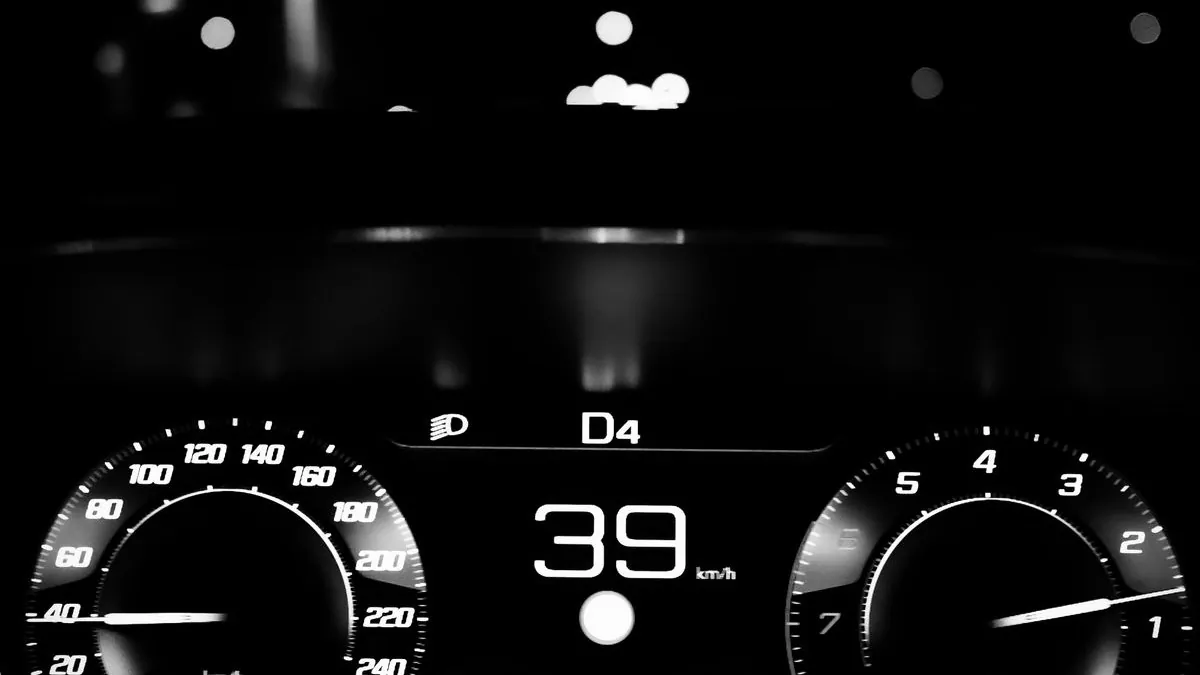
- Kilometers per hour (km/h) — the road unit for most of the world. Speed limits, car dashboards, cycling computers.
- Miles per hour (mph) — the road unit of the US and UK. As old as the mile itself: once roads were measured in miles, dividing by hours was the obvious next step, and it became the legal language of speed limits through stagecoaches, railways, and automobiles.
- Meters per second (m/s) — the SI unit and the physicist's choice. It plugs directly into equations for kinetic energy and momentum, which is why science, wind measurements, and ballistics use it.
- Knots (kt) — one nautical mile per hour. The language of ships and aircraft, for reasons with a wonderful history (next section).
- Feet per second (ft/s) — engineering and ballistics in the US customary world. Muzzle velocities, falling objects, HVAC airflow.
The bridge numbers to memorize: 1 m/s = 3.6 km/h exactly. That's the single most useful speed fact there is — it converts the science unit to the road unit in one step. From there: 1 km/h = 0.621371 mph, 1 mph = 1.609344 km/h (exactly the kilometers in a mile), and 1 knot = 1.852 km/h = 1.15078 mph.
4A short history of speed and the knot
The knot is the oldest speed unit still in daily use, and it comes from a rope. In the 1500s and 1600s, sailors measured a ship’s speed with a chip log: a wooden board on a rope knotted at intervals, thrown over the stern while a 28-second sandglass ran. The number of knots that ran out was the speed in nautical miles per hour — and the name stuck.
The nautical mile itself was tied to the Earth: one minute of latitude, about 1,852 metres. It was fixed internationally at exactly 1,852 metres in 1929, which is why one knot is exactly 1.852 km/h today.
Miles per hour and kilometres per hour came with roads and cars. Britain set its statute mile at 5,280 feet in 1593, and the metric world built km/h from the kilometre in the 1790s. Planes and ships kept knots; cars took mph or km/h depending on the country; and the three still meet on every travel site.
5The knot's story: a rope, a sandglass, 28 seconds
The knot has the best origin story in all of measurement. In the 17th century, sailors measured a ship's speed by tossing a wooden panel — the chip log — overboard on a long rope with knots tied at regular intervals. The rope ran out as the ship moved forward; a sailor counted how many knots passed in 28 seconds, timed with a sandglass. The count was the speed, directly: each knot stood for one nautical mile per hour.
And the nautical mile itself is beautifully rational: one minute of latitude — one sixtieth of a degree of the Earth's circumference as measured at the equator. It was fixed internationally at exactly 1,852 meters in 1929. So one knot = 1.852 km/h = 1.15078 mph, and speeds map directly onto navigation charts: travel at 10 knots for 6 minutes and you've covered exactly one nautical mile. Try doing that with statute miles and you'll see why sailors never switched.
6The conversion factors that matter
You don't need all twenty possible pairs — these cover everything:
Our converter works by routing everything through meters per second: multiply your value into m/s, then divide out to the target unit. For mph specifically: mph = (m/s) ÷ 0.44704. You don't need to remember the plumbing — but knowing the headline factors lets you sanity-check any result.
1. German autobahn sign: 130 km/h → mph: 130 × 0.621371 = 80.8 mph.
2. US speed limit 65 mph → km/h: 65 × 1.609344 = 104.6 km/h.
3. Sprint: 10 m/s → km/h: 10 × 3.6 = 36 km/h — elite human sprinting speed.
4. Ship doing 20 knots → km/h: 20 × 1.852 = 37.0 km/h (23.0 mph).
| Kilometers/hour | Miles/hour | Meters/second | Knots |
|---|---|---|---|
| 10 km/h | 6.21 mph | 2.78 m/s | 5.40 kt |
| 30 km/h | 18.64 mph | 8.33 m/s | 16.20 kt |
| 50 km/h | 31.07 mph | 13.89 m/s | 27.00 kt |
| 80 km/h | 49.71 mph | 22.22 m/s | 43.20 kt |
| 100 km/h | 62.14 mph | 27.78 m/s | 53.99 kt |
| 120 km/h | 74.56 mph | 33.33 m/s | 64.79 kt |
7Speed limits around the world
The most common reason anyone converts speed: driving in a country that uses the other unit. Get this wrong and you're either crawling (annoying) or speeding (expensive). Here's what the signs mean:
| Where | Typical highway limit | In the other unit |
|---|---|---|
| USA (varies by state) | 65–75 mph | 105–121 km/h |
| UK | 70 mph | 113 km/h |
| Germany (advisory) | 130 km/h | 81 mph |
| France | 130 km/h | 81 mph |
| UAE / Gulf | 120–140 km/h | 75–87 mph |
| Pakistan (motorway) | 120 km/h | 75 mph |
| Australia | 100–110 km/h | 62–68 mph |
Two things trip up cross-border drivers. First, the "100 ≈ 60" shortcut: 100 km/h is actually 62.14 mph, and 60 mph is 96.56 km/h. The shortcut is within 4% — fine for a rough sense of pace, not fine for cruise control near a speed camera. Second, urban limits: 50 km/h (31 mph) zones are everywhere in Europe, and 30 mph (48 km/h) zones in the UK. Convert the town limit before you enter town, not after you see the camera flash.
8Wind, storms and running: speeds in the wild
Roads are only half the story. Weather reports mix units freely — and the numbers matter more than on a dashboard:
- Wind: meteorologists often report in m/s or km/h; aviation uses knots; US forecasts use mph. A 25 m/s wind is 90 km/h (56 mph) — strong enough to damage roofs. The m/s → km/h × 3.6 shortcut earns its keep here.
- Storms: hurricane categories are defined in mph and knots (Category 1 starts at 74 mph / 64 kt). When a storm report says 100 kt, that's 185 km/h (115 mph) — multiply knots by roughly 2 for a quick km/h estimate (exact: 1.852).
- Running: a 5:00/km pace is 12 km/h (7.46 mph); marathon world-record pace (~2:00/km... actually ~2:55/km) sits near 20.6 km/h. Treadmills in the US show mph, training plans from Europe show min/km — convert the pace, not just the speed.
- Cycling: 40 km/h (24.9 mph) is fast amateur; pros hold 50+ km/h in time trials.
And for the trivia shelf: the speed of sound at sea level at 20 °C is about 1,234.8 km/h (767.3 mph) — Mach 1. It varies with air temperature, which is why supersonic math lives in the physics department, not the dashboard.
Swimming and rowing deserve a mention too, because water speeds feel deceptively slow in the "wrong" unit. An Olympic freestyle swimmer covers 100 meters in about 47 seconds — roughly 7.7 km/h (4.8 mph), barely a brisk walk on land, yet superhuman in water. Elite rowers hit around 20 km/h in sprints. The units are the same as on the highway; only the medium changed, and water is about 800 times denser than air, which is why every kilometer per hour in a pool is earned the hard way.
9Why planes and ships refuse to give up knots
Aviation could have metricated decades ago. It didn't, and the reason is the chart: a nautical mile is one minute of latitude, so a speed in knots converts directly to progress across a map. At 480 knots, you cover 8 nautical miles per minute — pilots can do that division in their heads while flying the plane. Statute miles would add a pointless conversion to every navigation calculation.
There's also the small matter of global coordination: every country's air traffic control, every ocean-going ship, and every weather service at sea speaks knots. Changing it would mean retraining the entire planet's worth of pilots, sailors, and controllers simultaneously — for zero safety benefit. Some standards survive because they work, not because they're modern.
For passengers, the useful conversions: cruising airliners fly around 450–500 knots (833–926 km/h, 518–576 mph). When the captain says "we're doing 550 miles per hour," that's about 478 knots or 885 km/h — now you know exactly how fast "fast" is.
10Mistakes everyone makes
- The "100 = 60" shortcut as gospel. 100 km/h = 62.14 mph. Two mph doesn't sound like much until it's the difference between a ticket and a warning.
- Mixing up knots and mph. They're close-ish (1 kt = 1.15 mph) but not close: a 100-knot wind is 115 mph, a 15% gap that matters in a storm.
- Forgetting m/s is the science unit. Plugging km/h into a physics equation built for m/s gives answers off by a factor of 3.6 — the classic homework error.
- Assuming speedometers are exact. Most read 2–5% high by design (manufacturers prefer you think you're faster than you are). Your converted "limit" should include that margin.
11Beyond the road: Mach numbers and light speed
Roads and runways cover everyday life, but speed units stretch much further in both directions — and the conversions stay exactly the same.
Mach numbers measure speed relative to the speed of sound. Mach 1 is the speed of sound itself — about 1,234.8 km/h (767.3 mph) at sea level at 20 °C. A fighter jet at Mach 2 is doing roughly 2,470 km/h. The "about" matters: the speed of sound rises with air temperature, so Mach 1 at 35,000 feet (where it's around −50 °C) is only about 1,062 km/h. That's why aviation uses Mach instead of km/h up high — the physics of shock waves cares about relative speed, not absolute.
Passenger reality check: Concorde cruised at Mach 2 (about 2,140 km/h), crossing the Atlantic in under 3.5 hours. Today's airliners cruise around Mach 0.78–0.85 — roughly 850–950 km/h depending on altitude and temperature. When a pilot says "Mach .80," you now know that's about four-fifths of 1,235 km/h at sea level, less up high.
At the extreme end sits the universe's speed limit: light travels at 299,792,458 meters per second — defined exactly, since the meter itself is now defined by it. In road units that's about 1.08 billion km/h, which is why nobody bothers converting it for driving. But it gives a lovely sense of scale: sunlight takes about 8 minutes 20 seconds to reach Earth, so the Sun you see is always eight minutes in the past.
And at the slow end? The hour hand of a clock moves at about 0.000004 m/s. Continental drift ambles along at centimeters per year — roughly a billionth of a meter per second. Same units, same math, from tectonic plates to photons. Speed is just distance over time, whether the distance is a mile or a light-year.
One more habit for travelers: learn the local "feel" numbers, not just the conversion. If you're spending a month in the US, internalize 30/50/70 mph the way you know 50/80/110 km/h at home. Conversion gets you through the first week; fluency gets you through the rest.
12How to use our free speed converter
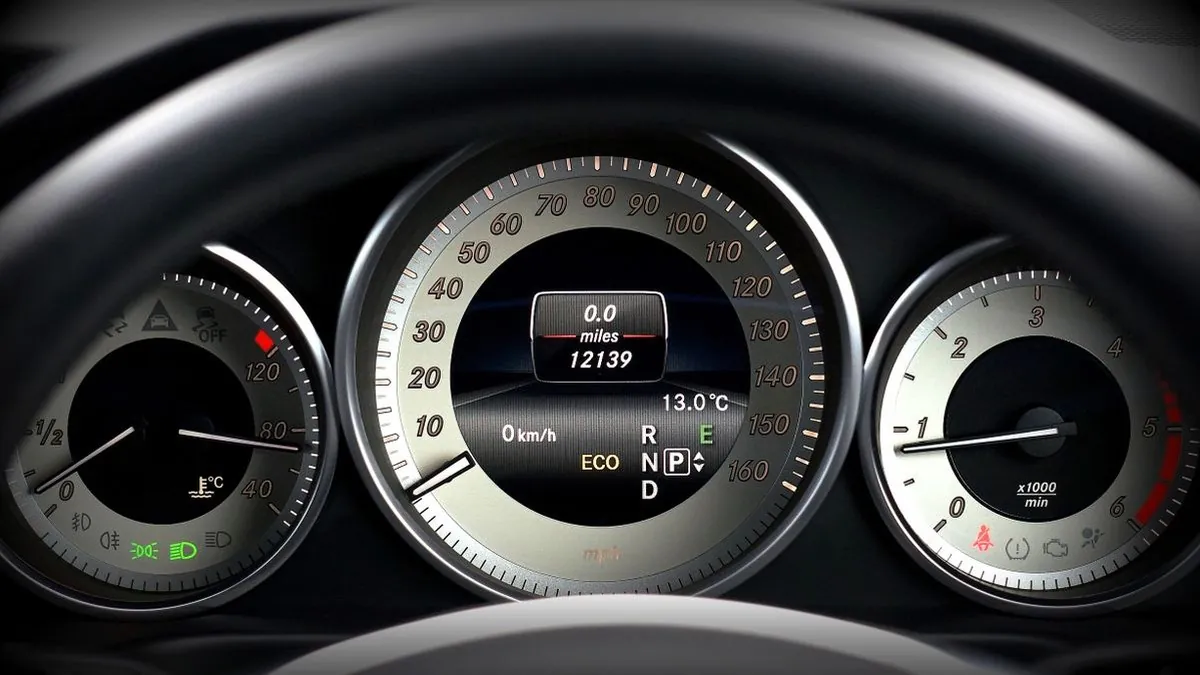
Pick any two of the five units — m/s, km/h, mph, ft/s, knots — type in either box, and convert instantly with exact factors. The page shows all units at once, includes a 10–120 km/h reference table, and the URL updates as you type so any conversion is shareable. Free, private, no signup.
Convert km/h, mph, knots & more
Five speed units, exact factors, a full reference table, shareable links. Free forever.
🏎️ Open the Speed Converter100% free · No account · Private by Qevryn
13Frequently asked questions
What is the km/h to mph formula?
Multiply km/h by 0.621371. Example: 100 km/h × 0.621371 = 62.1371 mph. To go back, multiply mph by 1.609344.
How many mph is one knot?
One knot = 1.15078 mph (1.852 km/h). Knots are used for maritime and aviation speeds.
How do I convert m/s to km/h?
Multiply by 3.6 — exactly. 10 m/s = 36 km/h. To go back, divide by 3.6.
Why do ships and planes use knots?
A knot is one nautical mile per hour, and a nautical mile is one minute of latitude (1,852 m) — so speeds map directly onto navigation charts.
What is the speed of sound in km/h and mph?
About 1,234.8 km/h (767.3 mph) at sea level at 20 °C — Mach 1. It varies with air temperature.
Is 100 km/h the same as 60 mph?
Very close but not exact: 100 km/h = 62.14 mph, while 60 mph = 96.56 km/h. The "100 ≈ 60" shortcut is within 4%.
iLoveUnit is a Qevryn product — free, private, no signup.
Keep exploring
Speed is distance over time — these tools handle the other pieces:
Related guides
More step-by-step guides on this topic: