

What you can do with this tool
- Follow a recipe from the US: ounces become grams for your kitchen scale.
- Weigh parcels and portions: grams on the label, ounces in the recipe — now they match.
- Check a food label: 6 oz of chocolate is 170 g, so you know exactly what you're eating.
- Avoid the fluid-ounce trap: weight ounces and fluid ounces share a name but aren't the same thing.
It takes seconds — and the rest of this guide shows you how to convert without mixing up weight and volume.
Use the free Ounces to Grams Converter: convert ounces to grams instantly, for recipes, parcels and portions — open the converter →
📌 Key takeaways
- The formula: grams = ounces × 28.3495.
- 16 oz is 1 lb: which is 453.59237 g.
- 6 oz of chocolate is 170.1 g: 8 oz of cream cheese is 226.8 g.
- Watch out: ounces (weight) and fluid ounces (volume) are different units sharing a name.
⚖️ Ounces to Grams — at a glance
The key numbers from this guide, in one place.
1What are ounces and grams?
An ounce is the imperial unit of weight used in the United States for food, parcels and portions. A gram is the metric unit used almost everywhere else — and in all science. They measure the same thing, but the numbers differ a lot: 100 g is about 3.5 oz, and a pound (16 oz) is about 454 g.
The link is fixed: 1 ounce = 28.3495 grams. The ounce is defined from the pound, and the pound is defined as exactly 0.45359237 kg, so the conversion is exact. Multiply ounces by 28.3495 to get grams; divide grams by the same number to get ounces back.
Watch out for one trap: fluid ounces. A fluid ounce measures volume, not weight — it is how liquids are measured in the US. An ounce of water weighs about an ounce, which is convenient, but an ounce of honey weighs far more than a fluid ounce of honey takes up. Weight ounces and fluid ounces are different units that happen to share a name.
2How to use the converter
- Type the ounces. Decimals work — 2.5 oz is fine.
- Read the grams. The result appears at once, with pounds shown too for bigger weights.
- Flip it to go back — grams to ounces is one tap away.
If the recipe says "fl oz" — fluid ounces — you need a volume converter, not this one. Check the letters: "oz" is weight, "fl oz" is volume. Getting them mixed up is the most common mistake in recipe conversions.
3The formula — and mental maths
Ounces = Grams ÷ 28.3495
1 pound = 16 oz = 453.59237 g
Eight ounces is 8 × 28.3495 = 226.8 g — about 227 g. A hundred grams is 100 ÷ 28.3495 = 3.53 oz.
For a quick guess, multiply ounces by 28, or by 30 and take a little off. Four ounces is about 113 g by the exact factor (4 × 28.3495 = 113.4). The × 30 shortcut gives 120 g — close enough for a rough portion, too rough for baking.
Remember the anchors: 1 oz ≈ 28 g, 4 oz ≈ 113 g, 8 oz ≈ 227 g, 16 oz (1 lb) ≈ 454 g. With those four, you can convert most recipes and parcels without a calculator.
4A short history of the ounce and the gram
The ounce is Roman. The uncia was a twelfth of the Roman libra, and the word gave us both “ounce” and “inch”. The avoirdupois ounce used today — 1/16 of an avoirdupois pound — was standardised in England in the 1300s for everyday goods, while a different ounce, the troy ounce, was kept for gold and silver.
The gram is a product of the French Revolution. The metric system of the 1790s defined it as the weight of a cubic centimetre of water, and the kilogram as a thousand grams. It spread with the metric system until it became the world’s standard for small weights.
The two were fixed together in 1959, when the international yard and pound agreement set the pound at exactly 0.45359237 kilograms. One ounce is therefore exactly 28.349523125 grams — so 16 ounces is exactly 453.59237 g, one pound, with no rounding at all.
5Worked example: a recipe and a parcel
A US recipe calls for 6 oz of chocolate and 8 oz of cream cheese. Your scale reads grams.
Cream cheese: 8 × 28.3495 = 226.8 g — about 227 g.
For the parcel: the post office charges by the gram, and your parcel weighs 12 oz. Twelve × 28.3495 = 340.2 g — about 340 g. If the next price band starts at 350 g, you have 10 g of room for extra tape — and now you know it before you get to the counter.
A portion example: a nutrition label says a serving is 3 oz of chicken. That is 3 × 28.3495 = 85 g — about the size of a deck of cards, which is the usual way dietitians describe it.
6Common mistakes
- Mixing up oz and fl oz. Weight and volume are different things. Eight fluid ounces of water is about 227 g, but eight fluid ounces of oil is about 216 g and of honey is about 340 g. Use the right converter for the right unit.
- Using 30 instead of 28.35 for exact work. The shortcut is 6% off — over 16 oz it is an error of 26 g, enough to change a bake.
- Forgetting there are 16 ounces in a pound. A recipe that says "1 lb" means 16 oz, not 12. Twelve ounces is three-quarters of a pound.
- Rounding every ingredient. Rounding each of six ingredients separately can shift a recipe by a lot. Convert each one, keep one decimal, and round at the end if you must.
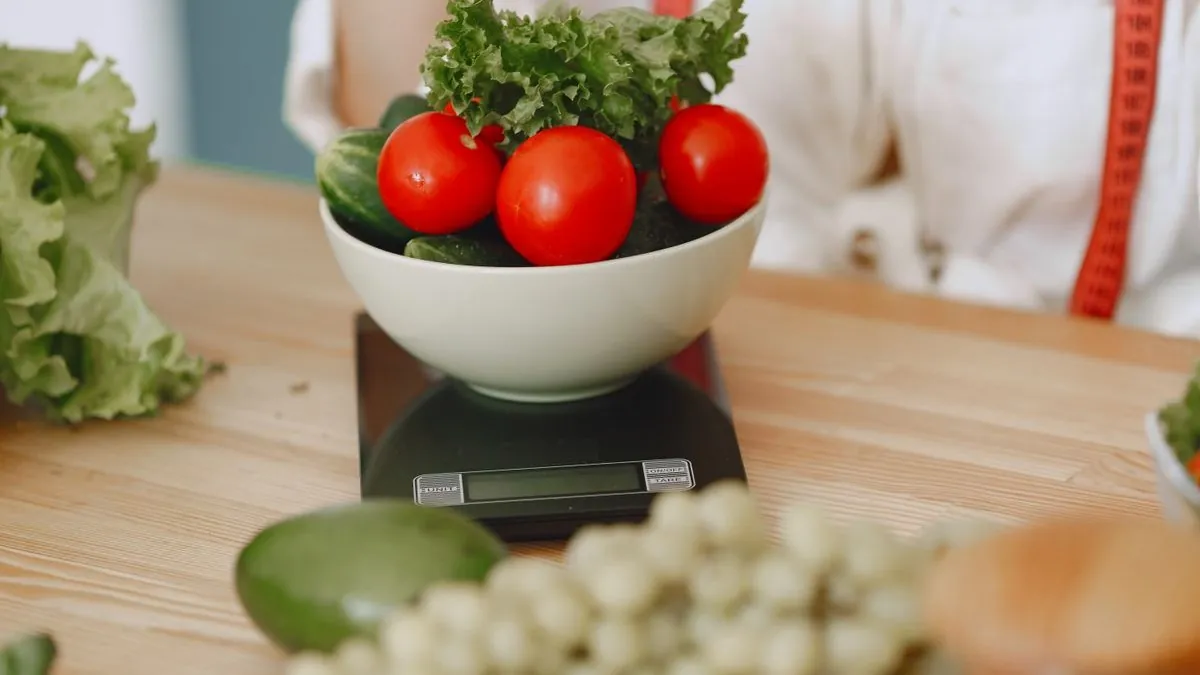
One more: trusting a kitchen scale that has not been zeroed with the bowl on it. The tare button exists for a reason — use it, or the bowl's weight ends up in your flour.
7Tips for converting smoothly
- Learn the anchors. 1 oz ≈ 28 g, 4 oz ≈ 113 g, 8 oz ≈ 227 g, 16 oz ≈ 454 g. With those, most recipes convert in your head.
- Weigh in grams when you can. Grams are finer than ounces — a gram scale is more precise than an ounce scale, which is why bakers prefer metric.
- Write both units on the recipe. "6 oz (170 g)" on a printed recipe saves the next cook from doing the maths.
- Check the letters. "oz" is weight, "fl oz" is volume. One letter makes all the difference.
Once the 28.35 rule is in your head, the two systems stop being a problem. It is one multiplication, and it works every single time.
8Putting it all together
Here is the habit to take away: keep the 28.35 rule and the four anchors in your head — 1 oz ≈ 28 g, 4 oz ≈ 113 g, 8 oz ≈ 227 g, 16 oz ≈ 454 g. With those, most recipes and parcels convert without a calculator, and the tool is there for the exact numbers whenever they matter.
One last check that catches most errors: read the letters. "Oz" is weight and "fl oz" is volume, and mixing them up is the most common mistake in recipe conversions. One letter makes all the difference — and checking it takes less than a second.
One more thing worth knowing: baking is chemistry, and chemistry likes exact numbers. A cake that works in grams works every time; the same cake in rounded ounces can vary from batch to batch. If you bake often, a gram scale is the single best tool you can buy — cheaper than a cookbook, and more useful.
Try the free Ounces to Grams Converter
Type in ounces and get grams instantly — with pounds shown too.
Try the free Ounces to Grams Converter100% free · No account · Private by Qevryn
| Ounces | Grams |
|---|---|
| 1 | 28.35 |
| 6 | 170.1 |
| 8 | 226.8 |
| 16 | 453.59 (1 lb) |
9Frequently asked questions
How many grams is 1 ounce?
One ounce is exactly 28.3495 grams — about 28.35 g.
How do I convert ounces to grams in my head?
Multiply by 28 — 4 oz is about 113 g (exact: 113.4 g). For a rough guess, multiply by 30 and take a little off.
What is the difference between oz and fl oz?
Oz measures weight; fl oz (fluid ounces) measures volume. Eight fluid ounces of water weighs about 227 g, but the same volume of honey weighs about 340 g — so you cannot swap them.
How many grams is 8 oz?
8 × 28.3495 = 226.8 g — about 227 g.
How many ounces is 100 grams?
100 ÷ 28.3495 = 3.53 oz — about 3.5 oz.
iLoveUnit is a Qevryn product — free, private, no signup.
Keep exploring
These tools go well with the Ounces to Grams Converter:
Related guides
More step-by-step guides on this topic: